Wondering if you can really live in Midtown Atlanta without relying on your car every day? For many buyers, the answer is yes, but with an important caveat: Midtown is usually best described as car-light, not fully car-free. If you want a home that makes commuting, errands, dining, and weekend plans easier without constant driving, Midtown gives you strong options. Let’s dive in.
Why Midtown Supports Car-Light Living
Midtown packs a lot into a small area. According to Midtown Alliance, more than 100,000 people spend time in the district each day, and the area includes more than 24 million square feet of office space and more than 82,000 daytime workers. That kind of density helps support the shops, restaurants, and transit access that make a car-light routine more realistic.
Just as important, many of Midtown’s buildings sit close to transit. Midtown Alliance says 96% of Midtown buildings are within a 6-minute walk of a MARTA station. The district also includes more than 40 linear miles of sidewalk, 5 miles of bike lanes, and 26 bus routes.
That combination is what sets Midtown apart for buyers who want to drive less. You are not depending on one feature alone. Instead, you get a walkable street grid, rail access, bus connections, bike and scooter options, and a mix of daily needs nearby.
What Car-Light Really Means
For most people, car-light living in Midtown means you can handle a large share of your week without getting behind the wheel. Your commute may happen on foot, by rail, by bus, or by bike. Grocery runs, dinner plans, coffee stops, pharmacy trips, and park visits can often stay within the neighborhood.
That is different from saying every resident can go fully car-free. Whether you can skip a car entirely depends on where you live, where you work, and how often you need to travel outside rail-served areas. In Midtown, the lifestyle is often more flexible than all-or-nothing.
This distinction matters when you are choosing housing. A building that looks great on paper may feel very different in daily life if it adds time or friction to your routine. In Midtown, location inside the neighborhood often matters more than almost anything else.
Midtown Transit Options
MARTA Rail Access
Midtown has four rail stations serving the district, but the two most important for many buyers are Midtown Station and Arts Center Station. MARTA says both stations are on the Red and Gold Lines. That gives you direct rail access for many common trips, including rides toward Downtown, Buckhead, and the airport.
Midtown Station is especially useful if you want to be near the center of the district or close to Piedmont Park. MARTA also notes that Midtown Station includes Zipcars, bike repair, and the Georgia Tech Stinger Shuttle at the south entrance. Arts Center Station also offers Zipcars plus local, regional, and shuttle bus connections.
One practical point many buyers overlook is parking. Both Midtown Station and Arts Center Station have very limited daily parking. That is one reason Midtown often works best for residents who plan to walk, bike, or use a short ride to reach transit instead of driving to the station.
Bus and Shuttle Connections
Rail is only part of the picture. Midtown also benefits from bus service and local circulators that help fill the gaps between stations, offices, homes, and shopping areas. Midtown Alliance says the Tech Stinger Bus connects the Campus Transit Hub and Midtown MARTA Station.
Midtown Alliance also notes that the Atlantic Station shuttle runs from Arts Center Station to The Flats and IKEA. These added layers of service can make a real difference if your home or destination is not directly next to a station.
Transit Hours That Fit Real Life
Commute convenience is not only about where transit goes. It is also about when it runs. MARTA says rail operates weekdays from 4:45 AM to 1 AM and weekends from 6 AM to 1 AM, while buses run weekdays from 5 AM to 1 AM and weekends from 5 AM to 12:30 AM.
For many buyers, that schedule supports more than a standard office commute. It can also work for dinners out, evening events, airport trips, and other plans that stretch beyond a 9-to-5 routine. If you want flexibility, those later hours are a meaningful part of the Midtown value proposition.
Walkability and Everyday Errands
A car-light lifestyle only works if daily needs are nearby. Midtown performs well here because it combines housing, offices, restaurants, and errands in the same general grid. Midtown Alliance’s directory lists more than 150 restaurants, along with grocery stores, pharmacies, convenience retail, and other everyday stops.
That means many of the trips that add up over a week can stay local. Instead of driving across town for basics, you may be able to walk out your front door and take care of what you need in one outing. For many buyers, that is the biggest quality-of-life upgrade.
This is also why buyers should think beyond square footage and finishes. A beautiful unit is important, but so is how easily you can reach coffee, groceries, fitness, green space, and transit. In Midtown, a shorter walk can change how often you actually use the neighborhood around you.
Biking and Scooters in Midtown
Bike Infrastructure Is Expanding
If you are open to biking or scooters for short trips, Midtown becomes even more convenient. Atlanta DOT says it is committed to a safe, comfortable bicycle network and uses NACTO bike-lane design standards. The city also offers a bike-rack program in the public right-of-way.
Midtown Alliance says the district’s street grid and bike lane network make bike and e-scooter travel easy, and that dockless bikes, e-bikes, and e-scooters are available from multiple mobility providers. It also says Midtown is adding more protected bike lanes and bike racks as part of its transportation network.
Recent Street Projects Matter
Several Midtown projects reinforce that long-term direction. Midtown Alliance says the Juniper Street project includes wider sidewalks and a separated bike lane protected by raised planting and other buffers. The 10th Street Bridge project includes a protected two-way bikeway, upgraded sidewalks and crosswalks, and other multi-modal improvements.
The Piedmont Avenue complete-street project also includes a protected northbound bike lane and a multi-use path. For buyers, these upgrades matter because they improve the feel and function of short daily trips, not just the look of the streetscape.
In practical terms, biking and scooter use in Midtown are part of the district’s mobility system. They can be especially useful for getting from home to MARTA, meeting friends for dinner, or moving around the neighborhood faster than walking without needing a car.
Housing Types That Fit a Car-Light Routine
Condos and High-Rises
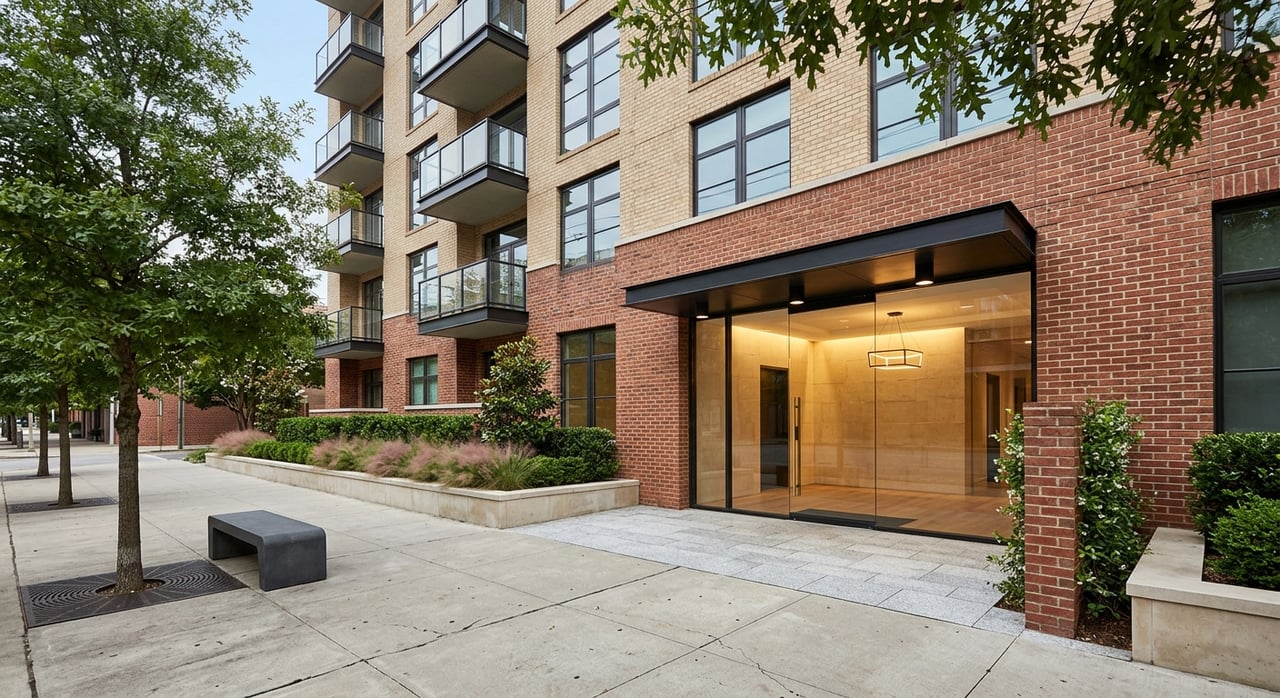
Midtown offers a broad mix of housing, which is part of its appeal. Midtown Alliance describes the area as having new high-rise condos and apartments alongside historic and established neighborhoods. For buyers focused on car-light living, condos and towers along major corridors often offer the most direct access to stations, restaurants, and errands.
You will find this pattern in the heart of Midtown, especially near Peachtree, West Peachtree, 10th, 12th, and 14th. If your goal is to reduce driving as much as possible, this part of the neighborhood often gives you the strongest setup.
Lofts, Apartments, and Edge Locations
Midtown also includes loft-style condos, mid-rise apartments, and housing on the edges of the district. On the western side, Atlantic Station adds another live-work-play option with townhomes, apartments, office space, retail, a hotel, and greenspace. Midtown Alliance describes it as a 138-acre community on the western edge.
These options can still support a car-light routine, but the balance may feel a little different. You may trade a slightly longer walk to rail for a different building style, layout, or neighborhood feel. That is why it helps to evaluate each address based on your real routine, not just the map.
Historic Homes and Townhomes
Midtown’s residential neighborhood also includes a roughly 360-acre historic district with early- to mid-20th-century single-family homes on a grid street pattern, according to Midtown Alliance. There is a smaller amount of townhome and single-family product around the edges of Midtown as well.
For some buyers, these homes offer more space or a different residential setting while still keeping parts of Midtown within reach. But if your top goal is the easiest possible transit and errand access, you will want to compare block-by-block convenience carefully.
Where Location Matters Most
Not every Midtown address delivers the same day-to-day experience. In general, homes closest to Peachtree, West Peachtree, 10th, 12th, 14th, Juniper, and Piedmont are more likely to support easy station access and walkable errands. That pattern follows Midtown’s station locations, street grid, and concentration of daily-use destinations.
By contrast, east-side historic areas and western-edge communities may offer a different balance of residential character and transit convenience. Neither is automatically better. The right fit depends on whether you care most about a quick train walk, a certain building type, or a quieter block.
This is where a neighborhood-specific home search becomes valuable. Two properties that seem equally “Midtown” online can support very different lifestyles once you factor in station access, sidewalk routes, bus options, and nearby retail.
Who Midtown Fits Best
Midtown tends to work especially well if you want to walk or use transit to jobs in Midtown itself, Downtown, or Buckhead. It also works well if you want access to airport trips and regional destinations without driving every day. Those commute patterns align well with the district’s MARTA service and overall connectivity.
If your work and routines mostly stay in rail-served areas, you may find that a car-light setup feels natural pretty quickly. If your schedule regularly pulls you into areas that are harder to reach by transit, Midtown can still reduce driving, but it may not eliminate it.
For buyers relocating to Atlanta, this is one of the most important mindset shifts. Midtown is less about avoiding cars at all costs and more about giving you options. That flexibility is what makes the neighborhood appealing to many intown buyers.
How to Shop for a Car-Light Home
If car-light living is a priority, it helps to screen homes with your actual weekly routine in mind. A smart search should look beyond finishes and amenities to focus on how the property functions for commuting and errands.
Here are a few useful questions to ask as you compare homes:
- How long is the walk to the nearest MARTA station?
- Are groceries, pharmacies, and restaurants close enough to reach on foot?
- Do the sidewalks and crossings feel practical for daily use?
- Would biking or a scooter make short trips easier from this address?
- Do you need a building or location that reduces the need for station parking?
- Are your most common work and social destinations rail-served?
That kind of analysis can help you avoid overpaying for a location that does not fully support the lifestyle you want. It can also reveal homes that perform better in daily life than they first appear online.
A knowledgeable Midtown advisor can help you compare not just properties, but also mobility patterns block by block. That is especially helpful if you are choosing between a central condo, an edge-of-district townhome, or a historic home with a different commute tradeoff.
If you are considering Midtown, the right home is not only about the unit itself. It is about how well the location supports the way you want to live day to day. If you want help comparing Midtown housing through the lens of walkability, commute ease, and long-term value, connect with Carson Cowan.
FAQs
Is Midtown Atlanta good for car-light living?
- Yes. Midtown is well-suited for car-light living because 96% of buildings are within a 6-minute walk of a MARTA station, and the district includes extensive sidewalks, bus routes, bike lanes, and everyday retail.
Can you live car-free in Midtown Atlanta?
- For some residents, yes, but Midtown is usually better described as car-light. A fully car-free setup is most realistic if you live near a station and work in Midtown or another rail-served area.
What MARTA stations serve Midtown Atlanta?
- Midtown includes four rail stations, with Midtown Station and Arts Center Station often being the most important for buyers evaluating commute convenience in the district.
Are groceries and errands walkable in Midtown Atlanta?
- Often, yes. Midtown Alliance lists grocery stores, pharmacies, convenience retail, and more than 150 restaurants within the district’s walkable grid.
What housing works best for car-light living in Midtown Atlanta?
- In many cases, condos, apartments, and loft-style homes near Peachtree, West Peachtree, 10th, 12th, 14th, Juniper, and Piedmont offer the easiest access to transit and walkable errands.
Do Midtown Atlanta transit options run late?
- Yes. MARTA rail runs until 1 AM daily, with early morning start times, and buses also run into late evening hours, which helps support commuting, dining, events, and airport trips.